

A1 Controller VS DJI Controller
Having owned DJI drones for years, here's my comparison of their controllers.
1. Piloting Philosophy: "Point" vs. "Push"
This is the fundamental difference you'll feel:
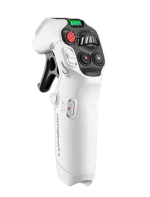
Antigravity A1 (Grip Controller): It uses FreeMotion technology. The idea is simple: you point the controller where you want to go and press the trigger. It's extremely intuitive because hand movement and drone direction are synchronized.
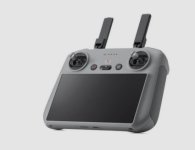
DJI (RC 2 / RC Pro): This uses a joystick system. It offers surgical precision, but it requires mental agility (left stick for altitude/rotation, right stick for horizontal axes). Even compared to the DJI Motion Controller (the Avata's joystick-style handle), the A1 often feels less rigid.
2. Independent View and Movement
This is where the A1 surpasses the traditional DJI experience, especially if you use the Vision Goggles (which are optional, though they require some precautions):
On the A1: You can look to the left with your head while continuing to fly straight ahead with the Grip Controller. This disconnect between your gaze and your flight path is revolutionary. With DJI (outside of specific FPV modes), the camera is generally locked to the drone's axis.
With DJI: To change your viewing angle, you either have to rotate the entire drone or use a dial to tilt the gimbal up and down. The A1 films continuously in 360°, so the controller is only used to move the flying platform, as the image capture is omnidirectional.
3. Ergonomics and Handling Features
Here's a quick comparison of the two systems:
DJI Antigravity A1 (Grip)
Grip: Vertical, pistol grip style.
Learning Curve: Virtually nonexistent (a few minutes).
Camera Controls: Dedicated pan wheel.
Feel: Cinematic "floating" sensation.
Weight: Very light (~125g), can be operated with one hand. Heavier (~420g), bulkier.
(RC 2 / Traditional)
Horizontal, requires two hands.
Long learning curve to master smooth flight paths.
Fighter jet/precision piloting.
Tilt wheel only.
Fighter jet/precision piloting.
Heavier (~420g), bulkier.
Having owned DJI drones for years, here's my comparison of their controllers.
1. Piloting Philosophy: "Point" vs. "Push"
This is the fundamental difference you'll feel:
Antigravity A1 (Grip Controller): It uses FreeMotion technology. The idea is simple: you point the controller where you want to go and press the trigger. It's extremely intuitive because hand movement and drone direction are synchronized.
DJI (RC 2 / RC Pro): This uses a joystick system. It offers surgical precision, but it requires mental agility (left stick for altitude/rotation, right stick for horizontal axes). Even compared to the DJI Motion Controller (the Avata's joystick-style handle), the A1 often feels less rigid.
2. Independent View and Movement
This is where the A1 surpasses the traditional DJI experience, especially if you use the Vision Goggles (which are optional, though they require some precautions):
On the A1: You can look to the left with your head while continuing to fly straight ahead with the Grip Controller. This disconnect between your gaze and your flight path is revolutionary. With DJI (outside of specific FPV modes), the camera is generally locked to the drone's axis.
With DJI: To change your viewing angle, you either have to rotate the entire drone or use a dial to tilt the gimbal up and down. The A1 films continuously in 360°, so the controller is only used to move the flying platform, as the image capture is omnidirectional.
3. Ergonomics and Handling Features
Here's a quick comparison of the two systems:
DJI Antigravity A1 (Grip)
Grip: Vertical, pistol grip style.
Learning Curve: Virtually nonexistent (a few minutes).
Camera Controls: Dedicated pan wheel.
Feel: Cinematic "floating" sensation.
Weight: Very light (~125g), can be operated with one hand. Heavier (~420g), bulkier.
(RC 2 / Traditional)
Horizontal, requires two hands.
Long learning curve to master smooth flight paths.
Fighter jet/precision piloting.
Tilt wheel only.
Fighter jet/precision piloting.
Heavier (~420g), bulkier.

